5 Non-Alcoholic Wines Worth Pouring
A good bottle makes room for everyone. Start with Giesen 0% Sauvignon Blanc for a crisp white.
A shared table should have a good glass for everyone. These five bottles suit different tastes, from crisp white to pink fizz and red wine.
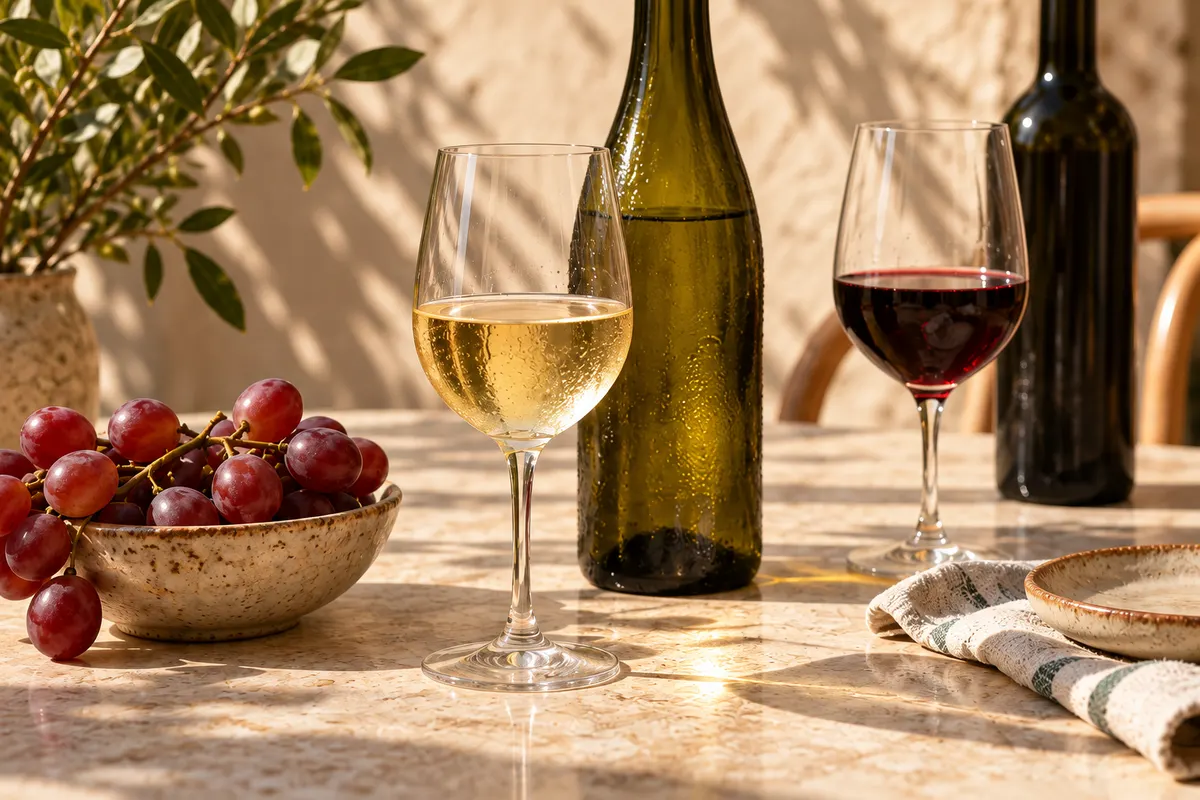
I would start with one bottle that fits the food, rather than buy a whole case. Good non-alcoholic wine can have real charm. It also asks for a small shift in what you expect from a glass.
These five wines cover crisp white, sparkling rosé and two kinds of red. My first choice is Giesen for a white with dinner. For a toast, I would put Leitz on ice. For a red, I would choose between ARIEL and Oddbird based on the meal.
Five bottles, five places at the table
| Pick | Who it suits |
|---|---|
| Giesen 0% Sauvignon Blanc | A crisp white with dinner |
| Leitz Eins-Zwei-Zero Sparkling Rosé | A pink fizz for a toast |
| FRE Chardonnay | A small first purchase |
| ARIEL Cabernet Sauvignon | A red with familiar oak notes |
| Oddbird GSM | A red blend with dinner |
Those are starting points, not rules. Your best non-alcoholic wine may be the one that suits a small Sunday lunch, rather than a special occasion bottle. Match the style to what you already like.
1. Giesen 0% Sauvignon Blanc: my first white
I would pick Giesen 0% Sauvignon Blanc for someone who likes a crisp white. The maker describes citrus, lime and passion fruit, with a dry finish. That points me toward food with herbs, a bright sauce or a squeeze of lemon.
This is New Zealand wine with alcohol removed. Giesen uses a spinning cone process to separate and recover aromas as it takes out the alcohol. The bottle is labeled at no more than 0.5% ABV. The large 0% on the front should not replace a close look at the small print.
Where I would serve it
Put it beside a crisp salad, grilled fish or a plate of green veg. I like the idea of one white that can stay on the table through a light meal. A cold glass, small first pour and fresh food give this style room to work.
The tradeoff is body. If you love the weight and warmth of regular wine, a lighter Sauvignon Blanc may seem thin. Start with the crisp style as the goal.
2. Leitz Eins-Zwei-Zero Sparkling Rosé: for a toast
My pick for a pink fizz is Leitz Eins-Zwei-Zero Sparkling Rosé. The German producer lists rosehip and raspberry notes. Bubbles add a lively feel that can make a light wine feel more complete.
The current product page lists 0% by volume and a serving range of 9 to 10°C, about 48 to 50°F. Still, check the label on the bottle sold in your market. Brand naming and rules around alcohol-free wine can be easy to confuse.
What makes it a useful rosé
I would choose this sparkling rosé for a toast with salty snacks. Pink fizz looks at home in a wine glass and suits a short, cheerful pour. You do not need to save it for a huge event.
My limit is simple: buy it if you want bubbles. A person who wants still, dry rosé may find that this scratches a different itch. The best non-alcoholic rosé for your table depends on that choice first.
3. FRE Chardonnay: a small first step
FRE Chardonnay makes sense if you want to try a small amount. The brand lists both a 750 mL bottle and four packs of 187 mL bottles. Small bottles can cut waste when only one guest wants wine.
The producer describes apple and citrus notes with a tart finish. This California wine uses a spinning cone process and contains less than 0.5% ABV. It also lists grape juice among its contents. Expect a fruit-led style, rather than assume every Chardonnay tastes rich and oaky.
The detail I would not miss
FRE says to keep it chilled and use an open bottle within one to two days. That makes the small format more than a cute package. It is useful if a full bottle would sit half-finished in the fridge.
I would serve it with a simple lunch. If your idea of Chardonnay is a deep, buttery white wine, choose with care. The name of the grape does not promise the same body once the alcohol is removed.
4. ARIEL Cabernet Sauvignon: a red with oak notes
For a red with familiar wine cues, I would look at ARIEL Cabernet Sauvignon. J. Lohr describes oak aging, dark fruit and chocolate notes. That gives it a different role from the fresh white wines above.
ARIEL uses reverse osmosis to remove alcohol. Its newer package has a screwcap and a lighter bottle, so an older photo may look quite different from what arrives. Match the full product name, not just the color of the label.
Keep the food simple
I would try it with roast mushrooms, lentils or a tomato-based meal. Dark berries and oak sound like a better fit there than beside a sharp green salad. A small plate makes it easier to work out what you like.
Do not expect the heft of a full-strength Cabernet Sauvignon. If grippy tannins and a long, warm finish are the main draw for you, this kind of red wine may need the biggest adjustment. I would buy one bottle first.
5. Oddbird GSM: a red blend for dinner
Oddbird GSM is my other red wine choice. The maker lists Grenache, Syrah, Mourvèdre and Carignan from southern France. Its description points to red and black fruit, dry earthy notes and tannins.
Oddbird says the wine is aged for 12 months before a low-temperature process removes the alcohol. The ingredient list also includes grape must concentrate. It is worth reading that list if you are comparing sugar, rather than taking a dry taste to mean no sugar.
A good reason to try a blend
I would put this beside a rich bean stew or roast veg. A red blend gives you a route away from chasing an exact copy of one favorite grape. Think about how the glass works with dinner.
Check a US seller before ordering. Oddbird's main international shop lists EU delivery. Its US reach does not mean every bottle is on every local shelf. Shipping cost can change the value of a single purchase fast.
What does non-alcoholic wine taste like?
Expect less warmth and often less weight than traditional wine. Alcohol changes how wine feels in your mouth. Take it away and the fruit, acid and tannins can land quite differently. A drink can be pleasant without being an exact copy.
Words such as green apple, red berries and tart cherry describe a flavor family. They do not mean those fruits were added. The same goes for rose petals, oak and dark chocolate. Read the ingredient list for what is actually in the bottle.
I would use a simple scale at home: too sweet, too sharp, or well balanced for you. That tells you more than asking whether it tastes like the real thing. These are real wines with their own strengths and limits.
What drinkers say about that gap
In a discussion of Giesen at Trader Joe's, drinkers describe a light, bright white and debate how close it comes to wine. That split is useful. The features one person likes may be exactly what another person misses.
I would not let one glowing review decide a case order. Look for someone who likes the same style you do. A fan of sweet drinks and a fan of sharp white wines can give honest, opposite views of the same glass.
Is non-alcoholic wine really alcohol-free?
Not always. In the US, the FDA distinguishes non-alcoholic from alcohol-free labeling. A non-alcoholic label can allow a trace of alcohol below 0.5% by volume. Alcohol-free means none.
Do not use a big zero, a brand name or the phrase zero proof as your only guide. Find the alcohol statement. If avoiding every trace matters to you, get a clear answer about the exact bottle before you choose it.
I would keep that check separate from taste. A delicious glass is not proof of a label claim. Nor does a small trace tell you whether you will like the drink.
Three label checks before you buy
First, read the ABV, which means alcohol by volume. Next, compare the serving size on the nutrition panel. Then check the ingredients and any allergen statement. These three steps work whether you shop online or in a store.
Words on the front can be broad. The back label gives you the useful detail. If a shop shows an old label, ask for the current one rather than guess.
How wine gets its alcohol removed
Dealcoholized wine starts with fermenting grapes. Yeast turns sugar into alcohol during fermentation. The maker then takes most of that alcohol out. This is why the process differs from simply bottling grape juice.
Vacuum distillation lowers the pressure so alcohol can be removed at a lower heat. A spinning cone column is another tool used in this work. Reverse osmosis uses a membrane as part of a separation process. Makers choose their method and may adjust the finished drink.
Leitz explains its low-temperature process and the challenge of keeping the wine's character. That helps explain why non-alcoholic wine is not always cheap. It has an extra production step after the wine is made.
Wine alternatives can take another route. Some use tea, juice or added botanicals to build a wine-like drink. Neither route tells you on its own what tastes best. It does tell you what kind of product you are buying.
Low sugar? Compare the same size pour
Non-alcoholic wine is not one fixed recipe. Sugar can vary between bottles. Added sugar, grape juice or grape must may help balance the sharp edge left after removing alcohol.
For a fair comparison, line up the same volume. A 100 mL figure and a 5-ounce figure are different portions. A label with a small serving can look low sugar even when a full glass tells another story.
I would also separate flavor from numbers. A tart wine may still have sugar. A soft fruit note does not prove added sugar. Look at both the nutrition panel and the ingredient list.
Many shoppers hope for fewer calories. Check the actual label if that matters to you. I would choose non-alcoholic wine for its taste and fit at the table, rather than treat it as a health drink.
Match the wine to the meal
For a light lunch
Start with crisp white wines and food that has fresh herbs or a little acid. A heavy sauce can swamp a light glass. Let the plate and the wine meet at roughly the same weight.
For snacks and a toast
Sparkling wines are useful when food comes in small bites. Salt, crunch and fizz make a clear starting point. Sparkling rosé also gives people an easy choice when they cannot decide between red and white.
For a richer dinner
Try a red wine with roast veg, beans or mushrooms. Take a sip, have a bite, then try it again. If the wine seems thin on its own, the meal may make it feel more at home. It is also fine to choose water.
Chill it, pour less, keep it fresh
Follow the maker's serving guide first. I would start whites and rosé cold, then let a small pour warm in the glass. You can notice how the flavor changes without leaving the whole bottle out.
Use an ice bucket that fits your table to keep the bottle chilled through dinner. A mix of ice and water reaches around the bottle. Keep that chilling ice separate from clean cubes for drinks.
Once open, recap the bottle and put it in the fridge. Follow its specific storage window. Non-alcoholic bottles are not all the same, and a rule for full-strength wine may not fit them.
For a mixed drinks table, set wine alternatives beside the other choices with clear labels. Friends should be able to choose a glass without having to explain why. Leave sparkling water and plain water within reach too.
How I would buy the first few bottles
Start with two contrasting styles, such as a crisp white and sparkling rosé. Buy small formats where you can. Check delivery charges before you add more to a cart just to reach a minimum.
Then run a small comparison at home. Use the same size glasses, the same pour and the same food. Write down which wine you would finish, which you would share and which you would skip next time.
For an easy party with other drinks too, our canned cocktail guide explains serving sizes and flavor choices. Keep those alcoholic cans apart from the non-alcoholic wine so there is no mix-up.
Quick questions before the first pour
Which non-alcoholic wine should I try first?
For a crisp white, I would choose Giesen 0% Sauvignon Blanc. For fizz, I would choose Leitz Sparkling Rosé. Start with the style you enjoy and read the alcohol statement before buying.
Is non-alcoholic wine just grape juice?
Dealcoholized wine starts as fermented wine and then has alcohol removed. Grape juice does not go through that same sequence. Some finished wines include juice or concentrate, so check their ingredients.
Where can I buy non-alcoholic wine?
Look at wine shops, grocery stores, specialist online shops and the maker's own store. Stock varies by state and seller. Match the name, style and current label, then check the full cost with shipping.
What if I do not like the first bottle?
Try a different style before giving up on the whole shelf. If still red wine feels too thin, try a crisp white or a rosé with bubbles. There is no need to force a glass that does not suit you.